Beyond the Pill: How TMS and Spravato Fit Into a Modern Depression Plan
TMS and Spravato are FDA-cleared for depression that hasn't responded to medication alone. What each treatment actually is, who it's for, and what to expect over four to nine weeks.
Call or text 988 to reach the Suicide and Crisis Lifeline. Trained counselors are available twenty-four hours a day, seven days a week. If you are having thoughts of suicide, please reach out.
The Antidepressant-Only Era Is Ending
For nearly thirty years, the standard psychiatric response to depression that didn't respond to one antidepressant was to try another antidepressant. If that didn't work, try a third. Add a booster medication. Add a sleep medication. Add a medication to counteract the side effects of the booster medication. Over time, this often becomes a long list of overlapping prescriptions, each partially effective, each with its own trade-offs, none of them fully solving the underlying problem.
That era is ending.
Two treatments in particular have changed what a modern depression plan can look like: transcranial magnetic stimulation (TMS), FDA-approved for depression since 2008, and Spravato (esketamine), FDA-approved since 2019. Both are covered by most insurance for eligible patients. Neither is a pill. Both work in ways that antidepressants cannot.
This is a plain-English guide to what they are, who they are for, and what to expect from a course of either.
What TMS Actually Is
Transcranial magnetic stimulation is a non-invasive outpatient procedure. The treatment device is a coil (either shaped like a figure-eight or housed in a helmet) that sits on the scalp over the left prefrontal cortex, an area of the brain involved in mood regulation. The coil generates pulsing magnetic fields, similar in principle to an MRI machine, which produce a small electrical current in the brain tissue below.
That stimulation activates neural networks that are underactive in depression, and it boosts a protein called BDNF (brain-derived neurotrophic factor). BDNF is essentially "miracle grow" for the brain: it helps neurons form new connections, repairs damaged brain cells, and protects healthy ones. Exercise and sleep also boost BDNF; TMS just does it more directly and more intensively.
What It Feels Like
You sit in a chair, awake and alert. The technician positions the coil over the correct spot (a placement that's individually calibrated at the first visit). Treatment lasts roughly twenty minutes, sometimes as brief as five with newer protocols. You feel a rapid tapping sensation on your scalp. Some patients get mild headaches during the first few sessions; these typically resolve quickly.
What It Doesn't Feel Like
Many patients confuse TMS with ECT (electroconvulsive therapy). They are not the same. TMS requires no anesthesia. There are no cognitive side effects, no memory loss. You drive yourself to and from treatment, return to work the same day, and continue normal activities.
Course of Treatment
Typically thirty-six sessions over about nine weeks. That's a real time commitment, and it's worth understanding upfront. The treatment itself is efficient; the challenge is fitting three to five sessions per week into a working schedule.
Response
In our clinic and in the published research, roughly seventy percent of patients experience at least a fifty percent improvement in their depression symptoms. Some achieve full remission, meaning most of their symptoms resolve. Response tends to unfold on a bell curve: a smaller group notices change in the first two weeks, most patients feel a real shift in weeks four to five, and some responders don't see the peak effect until treatment ends or shortly after.
For: Adults with major depressive disorder who have not adequately responded to at least one, and usually two or more, antidepressant medications. TMS is also FDA-approved for OCD.
Not for (without careful evaluation): People with a history of seizures, metal in or near the brain, cardiac pacemakers, or vagal nerve stimulators. Some scalp tattoos with metallic ink can be an issue.
What Spravato Actually Is
Spravato is the brand name for esketamine, a nasal spray form of ketamine that is FDA-approved specifically for treatment-resistant depression and for depressive symptoms with acute suicidal ideation.
Ketamine itself has been used as a surgical and emergency anesthetic since the 1960s. It is one of the most-used medications on the World Health Organization's list of essential medicines, used by EMTs in the field and by surgeons in the operating room. In the past two decades, research has revealed something the anesthesia community had noticed for years: ketamine appears to have rapid, powerful antidepressant effects at doses well below anesthetic ones.
The mechanism is different from any oral antidepressant on the market. Ketamine acts on the glutamate system rather than the serotonin, norepinephrine, and dopamine systems, quiets a brain circuit called the Default Mode Network (which becomes overactive and self-critical in depression), and, like TMS, boosts BDNF and supports the formation of new neural connections. It also decreases neuroinflammation.
What It Feels Like
Spravato is administered in an office, under medical supervision. You self-administer the nasal spray under staff observation, then remain in the office for at least two hours while your blood pressure and other vitals are monitored. Most patients describe a dream-like or floating sensation, a sense of time slowing or speeding, and sometimes a feeling of transcendence or emotional release. Nausea is a common side effect, which is why patients fast for several hours before treatment.
You cannot drive after a Spravato session. You'll need someone to drive you home, and you'll need the rest of the day to yourself.
Course of Treatment
The standard induction is twice-weekly sessions for the first four weeks. If treatment is working, patients then move to a once-weekly and then every-other-week maintenance schedule. Some patients continue monthly for months or years; others do a course of treatment and then step down to standard care.
Response
Ketamine is considered a genuine breakthrough because it works so quickly. Where oral antidepressants can take four to eight weeks to show a full effect, some patients feel meaningful improvement within hours of the first ketamine dose. Published response rates for depression range from sixty to eighty percent. In our clinic, roughly eighty percent of patients report a positive antidepressant response to esketamine or IV ketamine. It is one of the most effective interventions currently available for suicidal ideation.
For: Adults with major depressive disorder who have not responded to at least two antidepressant medications. Spravato has specific FDA approvals for treatment-resistant depression and for major depression with acute suicidal thoughts.
Not for (without careful evaluation): Patients with a history of psychotic disorders, uncontrolled hypertension, certain cardiovascular conditions, or a history of substance misuse involving dissociatives. Every prospective patient is evaluated individually.
TMS vs. Spravato at a Glance
TMS Therapy
- FDA-approved: 2008
- Format: Non-drug, non-invasive
- Session length: 5–20 minutes
- Course: ~36 sessions over 6–9 weeks
- Recovery time: None; drive yourself home
- Anesthesia: None
- Common side effects: Mild headache in first sessions
- Response rate: ~70% see meaningful improvement
Spravato (Esketamine)
- FDA-approved: 2019
- Format: Medication, self-administered under observation
- Session length: ~2 hours (including monitoring)
- Course: Twice weekly for 4 weeks, then taper
- Recovery time: Rest of the day; can't drive
- Anesthesia: None
- Common side effects: Nausea, dissociation, transient blood pressure changes
- Response rate: 60–80% in published studies
What Both Treatments Have in Common
- They are outpatient. No hospital stay, no anesthesia (for TMS), and no operating room.
- They are covered by most insurance for eligible patients, including Medicare. Coverage typically requires prior authorization and documentation of previous medication trials. Ask your clinic to walk you through the specific requirements for your plan.
- They are not standalone. Both work best alongside good psychiatric care, therapy where appropriate, attention to sleep and lifestyle, and evaluation of the underlying root causes that may be driving symptoms.
- They can be combined. Some patients respond partially to TMS, then relapse, and respond well to a course of Spravato. Others do the reverse. In our practice, we build a plan around the individual.
One Thing About Ketamine Worth Naming Out Loud
When a patient has been depressed for years or decades, and suddenly begins to feel better, that improvement can bring its own difficulties. Dr. Jessica Katzman calls this "the therapeutic bends." Unexpected grief for the years that depression stole. Anxiety about how to actually live again. Relationships that shift when one partner recovers.
This is a good problem to have, in the sense that it means the treatment worked. It's also a real one, and it's part of why ongoing therapy alongside treatment is not optional. If we are going to help someone come out from underneath a decade of depression, they need support to build the life that becomes possible on the other side.
Where to Go From Here
If you have been on multiple antidepressants and are not where you want to be, TMS and Spravato are worth asking your psychiatrist about specifically. Both are more accessible than they were even five years ago. Both are safer and better-tolerated than the older interventional options they replaced. And both address depression through a completely different mechanism than an oral antidepressant, which is why they can work in patients for whom pills alone have not.
Neither is a magic bullet. Both have real limitations. But for the third of patients who don't fully respond to first-line treatment, they are two of the most important tools that exist right now.

References and Further Reading
- George MS, et al. Daily left prefrontal transcranial magnetic stimulation therapy for major depressive disorder: a sham-controlled randomized trial. Archives of General Psychiatry. 2010.
- Zarate CA, et al. A randomized trial of an N-methyl-D-aspartate antagonist in treatment-resistant major depression. Archives of General Psychiatry. 2006.
- Daly EJ, et al. Efficacy and Safety of Intranasal Esketamine Adjunctive to Oral Antidepressant Therapy in Treatment-Resistant Depression. JAMA Psychiatry. 2018.
- Clinical TMS Society. Clinical TMS Society Resources.
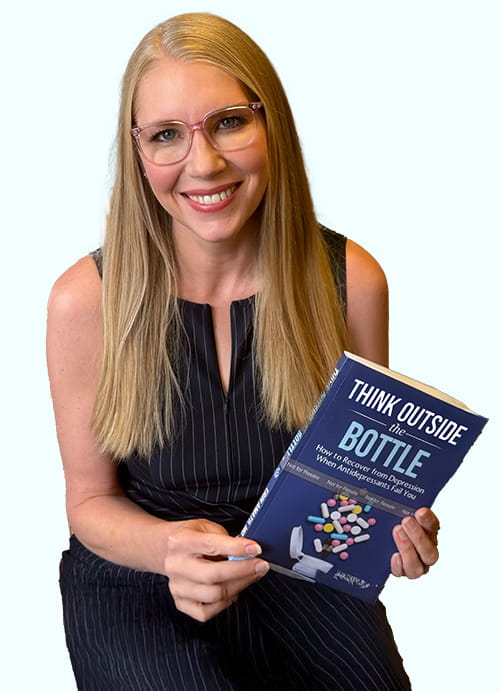
- Amato, E. Think Outside the Bottle: How to Recover from Depression When Antidepressants Fail You. Restoration Press, 2024.
Considering TMS or Spravato?
Montana Psychiatry & Brain Health Center was the first practice to bring TMS and ketamine treatment to Montana and Wyoming. Our team handles benefit verification and prior authorization so you can focus on care.
Schedule a ConsultationOr call us: Billings (406) 839-2985 · Bozeman (406) 551-8001
Frequently Asked Questions
What's the difference between TMS and Spravato?
Is TMS or Spravato covered by insurance?
How long does TMS treatment take?
Is Spravato addictive?
Can I try TMS and Spravato at the same time?
This article is educational and is not a substitute for care from your physician. Specific treatment recommendations, including candidacy for TMS or Spravato, are made on an individual basis after clinical evaluation. If you are experiencing thoughts of suicide, call or text 988 immediately.