Why Antidepressants Fail Nearly 1 in 3 Patients: What It Really Means
Roughly a third of patients don't fully respond to antidepressants, and it's rarely you, it's usually the tool. What the STAR*D trial actually showed, the phrase this psychiatrist stopped using, and what to try next.
Call or text 988 to reach the Suicide and Crisis Lifeline. Trained counselors are available twenty-four hours a day, seven days a week. Depression that has not responded to medication is common, and reaching out is a strong first step.
Joanne's Story
Joanne first developed depression and anxiety in middle school, though she didn't have a name for it yet. In college, a doctor diagnosed her and prescribed an antidepressant. It worked. She earned her degree, got a job in HR, married, and started a family.
Then her first child was born, and her depression came roaring back. The medication that had worked for years lost its effectiveness. Her prescriber switched her to a different one. It helped enough for her to get through her workday and manage her family, but her mood stayed low and the anxiety persisted.
Over the following years came more medication changes. Each one brought its own trade-offs: weight gain, loss of sex drive, emotional numbness, brain fog. Getting out of bed each morning became a fight. She managed to put on a pleasant face at work and at home, but she had nothing else left to give. She felt guilty about not being the mother she wanted to be, the partner she wanted to be. When her father died unexpectedly of a brain aneurysm, her world unraveled. A week after his funeral, she woke in a panic, unable to slow her thoughts.
Joanne is not the exception. She is one of the millions of Americans for whom the standard first-line treatment for depression, an antidepressant pill, is not enough.
The Number the Field Doesn't Advertise
In 2006, the National Institute of Mental Health published the results of the STAR*D trial, the longest and largest study ever done on the effectiveness of antidepressant medications. Over seven years, more than four thousand outpatients across forty-one clinical sites were treated with up to four sequential rounds of medication for major depression.
The finding: nearly one-third of patients were still suffering from depression after three antidepressant trials. Remission rates dropped from 27.5% after the first medication to just 6.8% by the third.
Read that again. After three different antidepressants, tried at adequate doses and durations, the odds of remission with the fourth pill were less than one in fourteen.
This isn't a fringe finding. It's the largest depression trial ever conducted, and its results have been replicated. Yet somehow the takeaway that gets shared with patients is often the reverse of what the data shows: try another medication, keep trying medications, the next one might work.
For a third of patients, it won't. Not because they are doing something wrong. Because the tool is wrong for them.
The Word I Stopped Using
The psychiatric field has a term for patients who don't feel better after two or more antidepressant medication trials: treatment-resistant depression, or TRD.
I no longer use it.
The word "resistant" carries the wrong meaning. Patients internalize it. They read it as they are the ones resisting. That there is something in them, some flaw or unwillingness, that is preventing recovery. I have sat with hundreds of patients who arrived in my office believing exactly this: that they are broken, that they failed the treatment, that if they were just stronger or more disciplined or more open, the medication would have worked.
None of that is true.
What is true is that oral antidepressants are one tool. When that tool doesn't work, it doesn't mean the depression is untreatable, and it certainly doesn't mean the person is untreatable. It means the tool was inadequate for that person.
I've started calling this oral antidepressant resistance, because that is what the STAR*D data actually describes. And for the courage it takes to keep showing up to treatment after treatment while carrying the daily weight of depression, I would rather use a different word entirely: treatment-resilient.
Why One Pill Isn't the Whole Answer
The theory behind SSRIs, which are the most commonly prescribed class of antidepressants, is that they raise levels of certain brain chemicals: serotonin, norepinephrine, dopamine. The idea took hold in the 1990s with the commercial success of Prozac, Zoloft, and Paxil. It's still the dominant model.
But depression is not simply a chemical imbalance in the brain. It is often a signal that something is off across multiple systems in the body. Chronic inflammation can drive depression. Undiagnosed thyroid dysfunction can drive depression. Low vitamin D, iron deficiency, sleep apnea, hormone imbalance, unresolved trauma, food sensitivities, and gut dysfunction can all drive depression, and often several of them at once.
An SSRI, taken in isolation, cannot fix any of those root causes. It can sometimes mask the symptoms enough that a person functions. But masking is not healing, and when the medication wears off (as often happens, sometimes years in), the underlying issue is still there.
This is why the STAR*D numbers look the way they do. Not because depression is impossible to treat, but because a single-tool approach to a multi-cause illness has a natural ceiling.
What Else May Be Happening When a Medication Isn't Enough
If the third or fourth medication has not delivered what you were promised, some or all of the following may also be happening, based on what I see routinely in my clinic:
- The dose or duration is too low. Some patients are dosed conservatively and never actually receive a therapeutic amount, or aren't given the eight weeks a full antidepressant response can take.
- The diagnosis needs a second look. Symptoms that look like major depression can be bipolar depression, ADHD, PTSD, or a physical illness like a thyroid disorder. Each of those requires a different treatment.
- Side effects are canceling the benefit. Emotional blunting, weight gain, and sexual dysfunction lead many patients to stop feeling like themselves, even when the "depression score" on a questionnaire improves.
- The medication list has grown into a cocktail. It has become common practice to add more medications to treat the side effects of the first medication, or to boost a medication that isn't quite working. Over years this becomes a long list, each drug partially effective, each carrying its own trade-offs.
- The root causes are physical. Inflammation, hormones, gut health, and nutrient status can drive depressive symptoms directly, and no antidepressant will resolve them.
Questions Worth Asking Before the Next Prescription Change
If your medication has stopped working, or never fully worked, these are questions I'd want a patient to feel comfortable bringing to their next psychiatry visit:
- Has my diagnosis been revisited recently? Depression that doesn't respond to standard treatment is sometimes something else.
- What physical causes have we ruled out? Thyroid, vitamin D, B12, iron, inflammation markers, sleep quality, hormones. These are basic labs and often not done.
- Am I on this dose because it's working, or because it's what we started with? Same question about duration.
- What are the options that aren't another pill? TMS therapy and Spravato are FDA-cleared, covered by most insurance, and change outcomes for many patients who have not responded to medication alone.
What Joanne Needed
Joanne came to my clinic looking for TMS. Over her nine-week course of transcranial magnetic stimulation, her sleep improved, the mornings got easier, and the suicidal thoughts that had been present daily faded into the background. By the end of treatment she experienced full remission. Six months later she was back at work.
She would have met the clinical definition of "treatment-resistant depression." But she wasn't resistant to treatment. She was resistant to one class of treatment. Given the right tool for her, she recovered.
If some version of Joanne's story feels familiar, please know that another medication is not your only option, and that not responding to the medications you've already tried is not a moral failing or a personal defect. It is a common, well-documented clinical reality with a growing set of real answers.

References and Further Reading
- Rush AJ, et al. Acute and longer-term outcomes in depressed outpatients requiring one or several treatment steps: a STAR*D report. American Journal of Psychiatry. 2006.
- National Institute of Mental Health. STAR*D: Sequenced Treatment Alternatives to Relieve Depression.
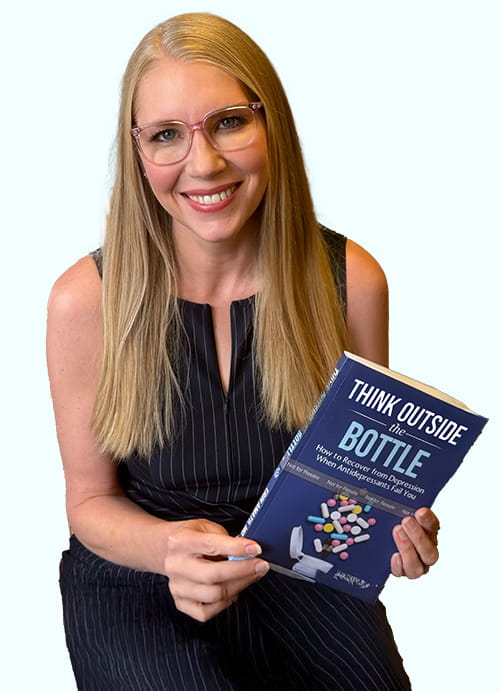
- Amato, E. Think Outside the Bottle: How to Recover from Depression When Antidepressants Fail You. Restoration Press, 2024.
Not Getting Better on Your Current Plan?
Montana Psychiatry & Brain Health Center offers integrative psychiatric evaluation, TMS therapy, and Spravato for patients whose depression has not responded to medication alone. Care is coordinated, judgment-free, and built around you.
Schedule a ConsultationOr call us: Billings (406) 839-2985 · Bozeman (406) 551-8001
Frequently Asked Questions
What does "treatment-resistant depression" actually mean?
Should I keep trying different antidepressants if the first one didn't work?
What are the alternatives when antidepressants don't work?
How do I know if I need a different approach?
This article is educational and is not a substitute for care from your physician. Any change to a psychiatric medication should be made with your prescribing clinician. If you are experiencing thoughts of suicide, call or text 988 immediately.